Thursday, December 21, 2023

Thoughts on Godbound

 Is Godbound OSR? Honestly at this point who cares, but it is at least broadly compatible with OSR content.

I ran two simultaneous campaigns for a rough average of 30-40 sessions each. One group leaned more 'philosopher-king refugee road-trip', while the other was more 'rock star adventurer vacation'


I drew for this campaign instead of the blog this past year which is mainly why the blog has been ded


The setting was the Sunset realm, as usual, but in an intersolar period, with no sun to chase off the infinite darkness and moon-madness normally kept at bay. This made for a world in enough shambles for Godbound characters to feel needed, and added an aspect of cosmic horror to tweak things just a little away from baseline godbound. Baseline godbound has dangerous monsters, but it's a universe where A Big God was basically in charge, giving a generally anthropocentric baseline. The likely 'top of the foodchain' in the sunset realms are kilometers-wide 'moons' which range in nature from derelict matrioshka brains to celestial superpredators to bubbles of alternate physics. The mighty solar pantheon driving off moons each solar age feels like triumphing over chaos to humanity, but to the moons it's more akin to gazelles escaping a lion... this time... kind of situation.

But from the godbound still changed the world, saved lives, etc etc, so this is not as grievous a departure from intended tone as my Esoteric Enterprises campaign, and as such my thoughts should remain relevant for people interested in the system in general.

Character Creation

Some aspects of the game feel vestigial, like in the case of lingering D&D sacred cows like 6 stat arrays and trying to make armor choice meaningful by having the tradeoff be 'worse saves but more AC.' Since you can pass saves with effort, this is not particularly menacing, and gifts that give base defenses are quite popular... as are enemies that auto-hit anyway. Parts of the game that take more from storygames feel a bit underdeveloped. Facts, things that give you +4 to relevant rolls and can justify starting with magic items or spellcasting, feel a bit like an Aspect from Fate, but without the narrative weight that makes Aspects meaningful. I barely remember more than one or two Facts from the dozens present on my players sheets, and I certainly don't think rolling under stat to adjudicate things was a common enough occurrence to make Facts feel mechanically relevant either (thank goodness.) Some players took the approach of having Facts add godly-sounding titles to their characters to commemorate their deeds, which seemed like a good way to add flavor even if they were usually mechanically irrelevant.

H'zeszh The Pitier

Words and Gifts

The meat and potatoes of the system. Again, I find it similar to Aspects and Stunts from Fate, but in a Dresden Files RPG way,where the reliance on them exposes why the mechanics of those abilities was actually fairly unimportant and focusing too much on them 'misses the point.' A list of cool abilities to peruse and select has some character-building appeal, and my players were torn between different character concepts, so I'm glad they had fun with this aspect of the game even if I find charop choices  to be of mostly illusory significance.
As a GM, I found the Words & Gifts system all vaguely dissatisfying, especially when I was called upon to use it in the bestiary. A lot of seemed to boil down to 'control things, destroy things, move through things, know things, protect things," with the flavor of 'with FIRE, or WITH WATER, or [insert flavor here.]' I do like reskinning abilities as a general design principle, but having about 25 pages of broadly similar abilities with a limited selection of unique ideas in there didn't really impress me. Having only the 'common miracle effects' could almost suffice if you wanted to have a superlite, trimmed down godbound document and indeed might encourage more personal, unique miracles.

The idea of the system is that you counteract and are countered in turn by gifts and miracles of opposing forces, using creativity to circumvent things. However, I couldn't shake this feeling of arbitrariness and homogeneity. When everyone has flexible, powerful abilities that mostly all equally counteract each other for 1 effort, it's easy for scenes to feel less like challenges and more like filler where we wait for someone to run out of effort, 1 action at a time.


Priestesses of Our Lady of Gardens


This may make it sound like I ran the dreariest empty-room battles ever to scourge RPGs, but I don't think that was (always) the problem. I tried to have environmental problems, stakes beyond 'fight or die,' motivations for involved parties. Classic superhero gaming concepts work well when applied in Godbound. And it's alright if combat isn't the main focus of a game- I really enjoyed the 'debate club of the gods' sessions, or the dance sessions.

But just as D&D has a very heavy focus on combat rules and filling your character sheet with combat relevant things, Godbound does too. And the non-combat gifts have a tendency to solve non-combat problems quickly and easily, so it becomes incredibly easy to overwhelm non-combat problems with miracles and gifts and then move on to a combat scene that takes up a fair bit of IRL time compared to anything else.


A good example is the Journey word. You might expect a Godbound who takes the journey word to be interested in long trips, and to have the game be about that to some degree. But the words of Journey ironically almost delete the experience of 'Journeying' from the game. Frodo going to Mordor with the Word of Journey would be like this
-He doesn't need to worry about supplies, or even sleeping. He can walk without rest forever.
-He doesn't need to worry about the ringwraiths- he is always faster than pursuers.
-He doesn't need to worry about terrain, or bad weather- he can cross Mount Caradhras as easily as the gap of Rohan. Moria is skipped.
-He doesn't need Gollum as a guide- he knows the safest way to travel already, and could slip through the Black Gates security, avoiding the Shelob encounter.
-No 'lesser foes' will appear as random encounters. No orcs, then.
-He could also really skip over things and just fly there in a day or two, essentially being the eagle question all over.

I certainly understand how design ended up here. Kevin Crawford sitting around with his game group, thinking of problems you have to solve with D&D travel, and writing down how Journey lets you avoid all that. But from a game design standpoint, the reward for being a master of Journey sort of just... removes it from gameplay. It would be like if Thieves had perfect 100% skills... at which point you might as well remove traps and locks from your dungeon entirely because they exist only to be skimmed over (said skimming was what I usually did for the players with the Theft word). Or if Fighters had 100% chance to defeat monsters, so why bother including them. Or if the Cleric can heal all consequences, so there's no great point in having curses, mutilations, diseases, or poisons. Or if the wizard can cast infinite Dispel Magic and simply magic any unpleasant arcana away. Normally, players have to interact with these things with some thought even if they can overcome these challenges, but when problems can be bypassed so easily, their inclusion in Godbound may make them seem more like bland Effort toll booths than anything.


I don't feel brainy enough to find an easy way around this design trap, and I have focused on the negative moreso than the positive here which may give an unfair impression of how bad things were. But that paradoxical feeling of 'your reward for playing the game well is... not having to play the game anymore' really haunted me when it came to prepping session content. It could be hard to linger in triumph  in noncombat problemsolving because it was over so quickly, and it had similar difficulty in creating challenges as high level D&D. One of the few things that gave the players any pause at all was a temple of a Frog God, who was enslaved by an ancient Lich who could call down meteors on anyone he knew the name of, who was in a temple supported by a vast self-replicating army of clay golems, who also each held a tadpole child hostage, and was supported by two other fell necromancers. The book informs me that it is fine for something like 2/3rds of situations to be solved quickly and easily, and I think I mostly followed that recommendation.... but it caused disparity with how the actually difficult stuff then took up, say, 7/10ths of playtime because the easy stuff was rolled over and forgotten as fast as I could prep or improv it, while the harder nuts to crack required much more IRL time devoted to them.


Salaneptha, nightmare princess


Magic

Definitely suffers from 'if magic is a good and versatile tool, everyone should want it' problem that games have from a design standpoint and fiction has as a problem of verisimilitude.

The limits on 'Low Magic' compared to divine powers and Theurgy is a pretty good solution, and could be broadly slapped onto other magic systems to prevent them from getting out of hand... though here they clearly seem to be mostly to stop magic from stealing the spotlight of Words.

Magic spells exist, but they're more of just a flavorful way to solve problems, and sometimes they allow for a cool solution that can't be covered by Words. Mainly, I think the magic system exists as a bridge between OSR content and Godbound rather than it's own thing, and that's fine.

The 'high' magics of Theurgy aren't bad, and cover the higher end of D&Desque spells fairly well, and have just enough 'utility that doesn't fit elsewhere' that the word of Sorcery should satisfy people who want to be the one with esoteric answers to esoteric problems. It definitely does not escape the prior-mentioned problem other words have though- when facing strange arcane abilities and evil sorcerers, players with the Word of Sorcery were typically better served simply effort-point-dispelling any fell magics rather than trying to specifically do things like 'wall of ice to block fireballs from having LoS.'

It did, however, make me aware of just how much of D&D is just pointing the DM back to the spell list. Demons and dragons and angels and liches and beholders and so on all require pondering the spell list, as do many magic items. And this causes some blandness, because the spell list is mostly about breaking and entering into high security dungeons, and so when Asmodeus pulls out his dark sorceries and it's just the usual wizard nonsense again, it doesn't feel strange and unknowable and frightening, but rather rote.


Arcem, the Setting

No opinions, honestly. I didn't hate it or anything, but I am fairly committed to layer-cake lore-stacks built on my own world and the adjacent realities of my player's campaigns, so I had no interest in using Arcem.


one of these days the Sunset Realm is gonna get the full 300x300 keyed hex map and I'll stop using kitbashed screenshots of roll20
but it is not this day

Gamemastering Tools


People have been complaining about how hard it is to run high level D&D since the moment someone's group realized an ancient dragon was like 1/3rd the HD of the party and was no longer an appropriate 'final boss of the dungeon.'
Godbound, knowing what it was dealing with from the beginning, does an admirable job of warning GMs that they gotta run a sandbox and gotta be pretty good at prep and improv. I was somewhat dissatisfied with the provided prep tables and mostly relied on personal improv, as I found the included tables were suitable for sketching a rough idea of a place thematically, but lacked the ability to whip up something meaningfully challenging or strategic. A longform example of play, or more than one to show starter and high-level play, would have been more useful to me than the 'cool character owns peasants with facts and god powers' examples given.

It provides some sandbox tools for creating political 'courts,' 'ruins' (dungeons) and challenges (assorted not-necessarily combat problems), which are not terrible, but lacked a certain substance in my opinion.
Something like 'the dungeon is full of toxic waste' will likely be solved with a miracle or two, so while it is fine for a quick improv, the random tables don't necessarily create a 'significant' challenge for godbound.
A good example might be, if godbound was a standard D&D retroclone, its tables would have entries like 'a locked wooden door' as a feature of a dungeon for typical OSR adventurers. While it is true 'locked wooden doors' are staples of dungeoneering, they are less 'something to define a dungeon and provide a memorable experience' and more 'a default assumption that may become interesting when combined with other, more interesting dungeon features,' not really something you can use on its own.


This may sound a little harsh, but the first(and last) ruin I actually generated with Godbound rules took, I dunno, an hour or more to roll up, and 1 fight scene and 4 noncombat miracles to conclude (the equivalent of 4 spell slots, not counting the fight). The godbound didn't actually have to leave the entry area, and only walked to the treasure vault themselves out of habit. I liked it well enough, but at the same time, I don't think any of the rolling and table consulting I did was all that relevant compared to the improv.

The factional play section had a sense it was going for a sort of minigame where the players tried not to create too many Problems by making Changes, and the factions did this and that to each other, but I ultimately didn't find it interesting enough to keep using after the first 4 faction turns. It had the same problem as the tactical combat section of gameplay, I would say- appears to have strategic considerations, quickly boils down to depleting the only relevant resource that matters and not really being worth tracking the minutiae of compared to focusing on Godbound actions. It's only a cul-de-sac of subsystem rules and easily disregarded, so this isn't a big deal. But, it's just another thing that takes up a few pages that I'd rather see an example of a Shard of Heaven high level dungeoncrawl, or an example of longer play in. The content tables are better here I think than in the ruin section though, and I think are decent for generating factions and giving them identifiable characteristics. All in all, the factional play won't suffice to turn the game into a 4X domain play grand strategy game of cult expansion, but would require a comparable level of fiddly minutiae to track for little reward.


The court of the Nightmare Sultan


The Bestiary

...is actually just "Words and Gifts" all over again, for the most part. Due to how combat works, monsters are mostly just smaller blobs of HP and Effort than a player is, and little of what they have will make them feel different, and most of what they have is a few gifts, or rarely full words. Reliance on the player-facing system makes everything feel very samey to me, while also requiring consulting the Words & Gifts section rulebook for constructing monsters, instead of just having them be challenges separate from the player-facing rules. I did not love this approach- it felt a bit like the problem of, say, the AD&D bestiary leaving it up to the GM to crack open the players handbook to kit out a Lich with spells, rather than the bestiary doing much on its own.

priestess of Yg


As a general rule, monsters that are actually threats are dependent on dealing straight damage (roughly 2-3 times more menacing than regular damage) and often hit automatically, ignoring AC, and finally get 2-3 actions per round. This more threatening type of damage can still be avoided via defensive miracles, so it is unlikely to manage to instantly kill people, and instead serves as a form of rapid effort depletion.

The game warns that for enemies to have a chance, they need to go on the offensive rapidly, or they will suffer from trying to defend against godbound who have higher total effort, and all the above traits serve to assist them. However, as godbound always go first and use side-based initiative, rather than something more staggered, fights tend to take the form of back and forth barrages that are either weathered, or result in destruction due to a lack of effort, with HD serving as a buffer. Supposedly creative back and forths of dispelling each others gifts typically comes down to nothing but effort depletion. If the GM is unable to come up with defensive options it may feel more like them folding a hand out of laziness, and the GM denying player ideas can feel like quashing creativity, and the GM not  denying such ideas makes everything a sort of laissez-faire, almost deterministic depletion of effort and HP.

Angel of Our Lady of Gardens and of Murulu


Being strict about allowing only thematically appropriate defensive miracles to block attacks may feel like you are being 'no fun allowed' but prevents combats from being such a slog. An example that came to mind is when a evil undead Luck god caused a allied NPC to slip and fall into a wall of fire... so the NPC used an effort to use her sword to catch herself... so the second luck-based attack had her falling on her sword... so the Sea godbound made a geyser to juggle her away...but if any Word can essentially be used as fine-control instant-reaction telekinesis, a lethal blow will never land until all effort is lost.

There are some unique abilities among bestiary monsters, but all that was mentioned above contributes to the sense that fighting an ancient mummy, a living hero, or a titanic mutant beast all plays out basically the same way. Some enemies have a 'random behavior' chart to ensure they don't simply soullessly dish out as much straight damage as they can with as much focused fire as they can muster, but this feels less like 'variety' and more like ' GM pity' or 'the enemies acting stupid.'


BLACK_SWAN

The ability to pass saving throws by spending an effort, no thematic justification required, contributes in part to this. There is no real reason to accept any seriously debilitating effect unless your effort has been strained to its maximum (a situation while not impossible, requires so much pressure from the GM that it may feel contrived), and saves are good enough that you rarely have to even spend effort to pass anyway. This contributes to the sense that 'the only thing worth anything is raw damage.' Both of the groups pretty swiftly discovered that using enhanced minions (who deal Straight damage) is pretty much the best way to carve through the health pools of your enemies, and Smite miracles likewise provide a 'delete an enemy' tool far more reliably than any clever effect that regrettably fades into irrelevancy due to being save-based.

If you are familiar with Magic The Gathering, imagine if all players by default had the ability to counterspell opposing spells at the cost of 2 Life points, or just had 7 'free' counterspells they could cast at any point. This may help illuminate the sense of 'nothing will do anything until the initial buffer of Effort is depleted, so you may as well just do damage with creature summons."

The face of the demon flail Temuridae should be credited to 'Dread the Slammer' by U M A M I on youtube


There are rules for adjudicating creative ways of conflict resolution that seem to have been made in the spirit of 'balance' which is well and good, but make it even harder to escape the 'creativity matters only as flavor in the face of Effort and HP.' One of my players had the idea that, as the God of Worms, they could transform people into worms, right? This is certainly allowed by the logic of other words, but the general miracle rules have a little caveat for transformations

"If the change would kill or totally incapacitate a (worthy foe)
person, roll it as if it were a damage-causing miracle. If the damage
rolled wouldn’t be enough to kill the target, the miracle’s not able to
change them that drastically, either, and no harm or damage is done"

So the creativity becomes yet another Smite vs HP calculation. Similarly, 'debuffs' like entangling vines, Slow effects, bestowed Curses, disadvantage on rolls operate with the same kind of considerations. They're not allowed to debilitate worthy foes in the same way that, say, a wizard catching someone in a Force Cage can. Nor is it permitted to seal people in stone blocks or pools of lava without a rather dull 'they get a round to move out of the way' caveat and a '1 damage per level per round' damage consideration, rather than more naturalistic rulings about 'yes they are sealed in a bubble of water and suffer the logical consequences thereof.'

 While I understand the mindset that led to this sort of balancing, know that the system can still be 'exploited' perfectly well via the use of summons and minions, who can chew through HP far more reliably than Godbound Player Characters can and get around the 'no extra actions for Godbound' action economy. My complaint is that while the developers did try to balance things so no one strategy dominates, their intentional or unintentional result was, in my experience, a HP/Effort depletion race.

Treasure

Many typical magic items that regular adventurers crave do not function for Godbound- a +5 sword is for different mathematical paradigms and works only for non-divine NPCs, and a flying carpet is encouraged to not function unless the Godbound have access to flight via a Gift or Artifact (more on those later).

Monetary treasure exists in a more abstract form of 1-10, ranging from the wealth of a rich man in a wealthy village to the treasure vaults of an Emperor. This wealth is valued for its ability to sanctify the temples of the Godbound or serves as an Influence/Dominion replacer, allowing changes to the world to be enacted abstractly. Mundane items have little value to Godbound, so wealth has little value save for being a protracted cipher for 'access to cult powers and existing mechanics.' There's not much point in determining whether the wealth is emerald-eyed idols or silk sheets- there are some considerations with regards to how difficult treasure is to carry or if it is fragile, since not all godbound will have ways around it, but unless your group is quite small, I wouldn't bet on the inventory being all too important to track most of the time.

Celestial Shards are an attractive generic reward to Godbound, but again, they are valued less on their own merit. They are simply a requirement for 'impossible' changes (such as conjuring pegasi to be the steeds of a city) and are essentially the 'key' to 'unlock' using your godlike abilities to make drastic changes in the world. You can almost imagine them as a 3rd type of special 'Experience Points' you have to collect to use your character abilities, or a kind of additional tax on certain actions.

Some NPC Hellknights with demonic weapons


Artifacts are the proper Godbound-level magic items, with powers along the lines of creating whole cities or chopping through entire armies! Mortals cannot even use them without being corrupted! They certainly seem akin to the Artifacts found in the Treasure sections of the AD&D DMG, which sounded well and good, but in practice it kind of felt like more of the same Words and Gifts with a use cap of Effort, just with a crafting system attached. Certainly unique powers can be conceived of and used as a nifty treasure, but the same applies to the characters innate abilities.
I might liken my disappointment with the Artifacts to be akin to a treasure table that was mostly crafting rules for making wands to cast spells you already knew. The God of the Sky can craft a flying carpet artifact, but can also just whip up a miracle to Wind Walk the party to their destination. (And so can the God of Birds, or Journey, for that matter.)


Queen Farid bint Dumandred

Personal Takes on Power Level & Theme
For all I complain about the players being largely unchallenged and combat being a game of paper tigers, the Godbound power level is strangely low in some areas. The godbound may deal an astounding 10HD worth of damage in a single smite action... but cannot destroy objects larger than a ship, or take more than Level# of companions flying with them at one time.

I do not wish to emulate gods who are omni-anything, but even the flawed and mortal gods of the Norse pantheon have some better feats than simply being 'really tough & hard-hitting adventurers.' The example I have in mind is when Thor is tricked into drinking the ocean during a drinking contest. He fails, but his mighty attempt creates the very tides of the sea from the depleted water level sloshing about. 

Godbound doesn't operate on this level  of mythological magical realism logic. Thor in the above scenario in godbound might instead simply spend an effort to not vomit profusely from being tricked into drinking saltwater, but lacking the word of the Sea, the Influence/Dominion required to lower its levels, and of course, the motive to do so, he can't really stumble into something like that. The limits of crushing/hurling objects with Strength are boat/wagon sized typically, and so the gods are more like street-level superheroes who occasionally do a wide-spread miracle, but feel less like these greater workings are some fundamental part of themselves embodied, and more like a Big Wizard casting a Big Spell. I tried to get around this sometimes like having murder be made impossible in a region because the God of Murder had sworn never to set foot there as the explanation for the expenditures of dominion/influence. Godbound was likely never meant to emulate Aetiological myths like that, so I may be being unfair here, but it's something that may make campaigns feel more mundane than mythic so I do feel the need to bring it up.

A god manifested from the bond between dogs and humanity

Even so, if we're thinking of the world more in terms of 'physics,' than 'symbolism,' the powers of the godbound are mighty in the world of D&D HP and Saving throws, but when confronted with certain questions of mass and energy beyond what can be expressed in human-scale D&D adjacent combat math, the feeling of 'just being Big Wizard Guy' tends to return.

There's nothing inherently wrong with Demigodbound, but my real complaint is that the system is unsure of where it stands to some degree on its own power level- endless abilities for bullying masses of peasants abound, and large changes can be enacted with Dominion/Influence, and things with stats can be smited... but things without stats, like a storm or a chasm, sometimes remain stolidly beyond the players reach, outside of the 20 cubic foot intervals they might be allowed to chip away at.

As a personal point of thematic inconsistency, I mildly disagree with Godbound's conception of Words. The god of Fear can also banish fear, making them the god of bravery as well by default. The god of Flames can also dispel them. The Word of Death is as much Undeath and 'Not-Dying' as it is 'Death.'
This has some advantage in that it allows players to put their own interpretation and spins on the Words, but I find it to smack a little of comic book writing, where justifications for why a character can use their powers to get to whatever point the writer requires can feel like the tools of lazy writing.

As such, anything the gods do, they are typically able to undo. Narratively, I think this is questionable because it gives a lack of consequences to actions. Game design wise, I think it's bad because it removes the design space of the 'negatives' of things, and while Godbound says that it's not supposed to be a game of 'gotchas' and 'unintended consequences of actions' I think something is lost when their decisions can be walked back. An example that comes to mind is the poor mortals cursed by the gods in Greek mythology- Arachne's story from greek mythology turns into something else entirely if she is brought back from the dead, or turned back into a human due to the changing whims of the gods rather than as a reward for lengthy quests or bizarre moral fable. Of course, such alterations only apply to the weak, as strong entities would simply spend 1 effort to ignore the effect, forcing any such transformation to require lengthy strength depleting battles to actually take effect.

As a bonus point of annoyance, there's a great deal of mind control scattered about with rough emotional correlations such as Fire=Angry, Madness giving control over the insane, or Dance having mind control just cuz. Turning roleplaying into 'I make the NPC do what I want them to do' is another of the much loathed 'abilities that skip over the act of playing the game.' And while the godbound are largely immune to it being done to them due to Effort, since the enemies all use the same abilities as the Godbound it does tend to be thrown at them as a possibility and imo, mind controlling player characters is something I think is Bad for a myriad of reasons both socially and game designy but I'm on enough of a tangent...

Actually Positive Remarks

The Bradster

This all may seem awfully negative for a game I played ~75 sessions split between two campaigns of, so lets try to throw in some things I liked. Not all of them are necessarily system specific, but oh well.

Players of the power level of Godbound are immediately Important. Their opinions about geopolitics, ethics, etc, matter because they can enact change. I think this encourages characterization and development of thought in ways that being a dirty adventurer dying in a hole does not.

The players can Change The World. I think it is low-key a waste to run a godbound campaign and then not have a future campaign in that world where players may be clerics of the gods, seek out their artifacts, marvel at their temples (ruined or otherwise) and so on.

You can use all the weird monster manual beasties that normally were 'level-gated' out of typical 'new D&D campaign' gameplay. Admittedly, they might not be as impressive if their main appeal was combat, but I had a good time using a False Hydra without it taking an entire mystery campaign arc, and had them fight Juiblex (or at least a simulacrum) for fun.

You can go absolutely nutty with designing challenges without much fear of a TPK ending the campaign, and so can use ideas that were too 'out there' for other campaigns.

It is, in my humble opinion, a waaaaay better approach to high level D&D shenanigans than 'This being has 10 million HP and +127 to-hit'


Advice if YOU ever want to run Godbound

A good way to approach interesting combats is to think of it as a superhero showdown- throw in ticking bombs and endangered civilians and crumbling buildings and mobility in combat to break up the back-and-forth of HP and effort depletion.

'Dungeons,' fortresses, etc that they raid should similarly be full of perils and obstacles which are not just passive walls of monster meat and stone, but problems the players must react to or go out of their way to preemptively solve. Some high level D&D dungeons try to solve player power by applying antimagic, anti-scry, anti-teleport, anti-tunnelling measures. I don't think that's a good idea for D&D, but it's DEFINITELY not a good idea for Godbound. Certainly it can be used in appropriate areas like the heavenly fortresses of rogue gods, but giving the players great abilities, then denying the players the use of their abilities to keep things 'manageable' misses the point entirely.

Run the game with intent to be very roleplay heavy, and not as a tactical wargame/problemsolving exercise as more standard OSR dungeon delves may be. The game advises 2/3 combat encounters to be there not as threats but as ways for the godbound to show off, so I think this intent exists in the game already. Bear in mind that Gifts abound with ways to bypass many social and informational problems, however.

Consider the game to be, in part, a world-building exercise. Anything that happens in a godbound game can be grounds for mythological past events in a future campaign in the world, and material for you to use later.

I recommend changing the initiative such that it alternates between 'player takes an action' and 'NPC takes an action' to break up the glutted barrages of side-based action and reaction. Or even doing a more standard individual initiative mode- I strongly think 'side based, with all players going first always' encourages boring strategies from the NPCs and PCs alike. 

For Legibility: Boss Monster, Smite Gifts, Entire Party of Godbound


Streamlining Procedure- Just as you should not require players to repeat things like "We look at the ceiling and tap the floor with a 10 foot pole as we advance through the dungeon" in every room after they've established that's what they do, similar streamlining of Godbound player action should be taken into account. A list of Journey miracles can be assumed to be in play unless otherwise mentioned with travelling. If the players want to know something, or even probably would want to know and have the word of Knowledge, and aren't in a position where spending effort would endanger them, you can simply tell them things without demanding precise announcement of which miracle they're using. If they walk into a room with sinister magics, you can spring right into describing what the bearer of the Gift of Perfect Understanding will understand about the evil runes.

Consider having one or more Big Bad Evil Guys who are out to GET the players. A sandbox is all well and good, but realistically speaking, most entities who are not aware and actively scheming to counter the players will likely be rolled over due to a lack of specific preparation against the myriad abilities of the godbound. If the players can phase through the earth, the majority of stone fortresses will suddenly be more disadvantage than defense, and there's no reason for Joe Tyrant #8 to see the player-stone-phase strategy coming any more than Joe Tyrant #1 did, assuming the players operate in a modicum of obscurity and the world does not have public television.
However, if Big Joe Evil is scheming to destroy the players and actively has spies and time to scheme, perhaps Joe Tyrant #8 will have Stun jellies on the edges of walls waiting to engulf unwary tunnelers, or Explosive Runes, or SOMETHING, thanks to the intel provided by Big Joe Evil. Having this kind of foe who can learn the players capabilities and try to come up with countermeasures not just for themselves, but for their lesser allies, can help keep the tactical/strategic aspect of the campaign continually challenging in a way that does not also have the issue of verisimilitude where each foe is inexplicably better prepared than the last one.

As a minor personal recommendation, word of Knowledge has a gift called 'The Best Course' which I think is absolutely terrible with regards to gameplay and you should ban it and any other gift that asks the GM to make an OOC decision about a value judgement about what is 'best' or tells the players what to do, rather than simply providing value-judgement neutral knowledge. If the players can ask the GM 'what should we do that has the best outcome' I believe the campaign will enter a horrid state of false player agency. Where their own decisions cease to be made, and the GM simply tells them what to do whenever they spend an effort, turning a game with multiple participants into a novel with one author.

And finally... consider a different system lol.


nuthin personnel, m'godbound


Should you play Godbound?
It may seem harsh to play what was by all accounts a very successful set of campaigns for nearly a whole year of weekly sessions, only to then say 'this system, which is most nobly available for Free online, wouldn't be my choice to run a campaign about Gods' but I think that is my ultimate conclusion. My summation of Godbound is that its design is ultimately derived from being "a power fantasy for D&D characters" and while it succeeded... that success shows the limits of this fundamental premise, and the possible clash of expectations derived thereof.

Fate, for instance, suffers from a similar problem of lots of conflict resolution feeling samey and being all about depleting Fate Points, but there's a lot less text to read and get caught up in thinking that it's all about the Combat Miracles. Fate is not my favorite storygame system, but I think it could work quite well for Godbound, without some of Godbounds mechanical pitfalls.

I'm not saying don't ever run or play Godbound. We had fun, for one campaign. You probably would too. It has a free version, so there's only moments of your lifespan at stake if you care to try it out. Not anything important, not like fungible currency!
But I think it's worth thinking to yourself about if, in your desire to play high-powered characters of myth, if a storygame might not capture the myth better, or if a superhero game might capture the spectacle of high powerscale battles of wits and might better.

What about Exalted?
AH HELL NAW I BEG YOU PLAY GODBOUND INSTEAD


Thursday, August 11, 2022

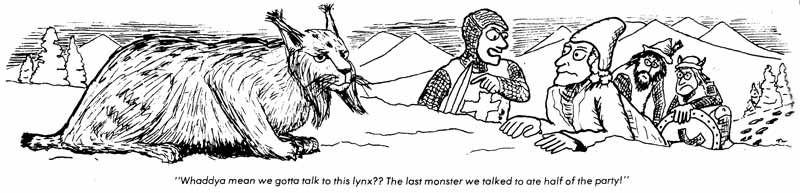
Giant Lynx, Mammoth, Manticore, Masher, Mastodon

 AD&D Giant Lynx


don't sue me TSR games I own the monster manual and can show it to people if I want...!

AD&D Mammoth, Mastodon
These nearly identical entries (Mammoth has 13 HD instead of 12, does 3d6 instead of 2d8, and has AC 5 instead of 6) take up a good half of a page and are largely redundant with the Elephant entry earlier. More and more evidence for the existence of someone very interested in finicky details of the pleistocene being involved with early D&D.

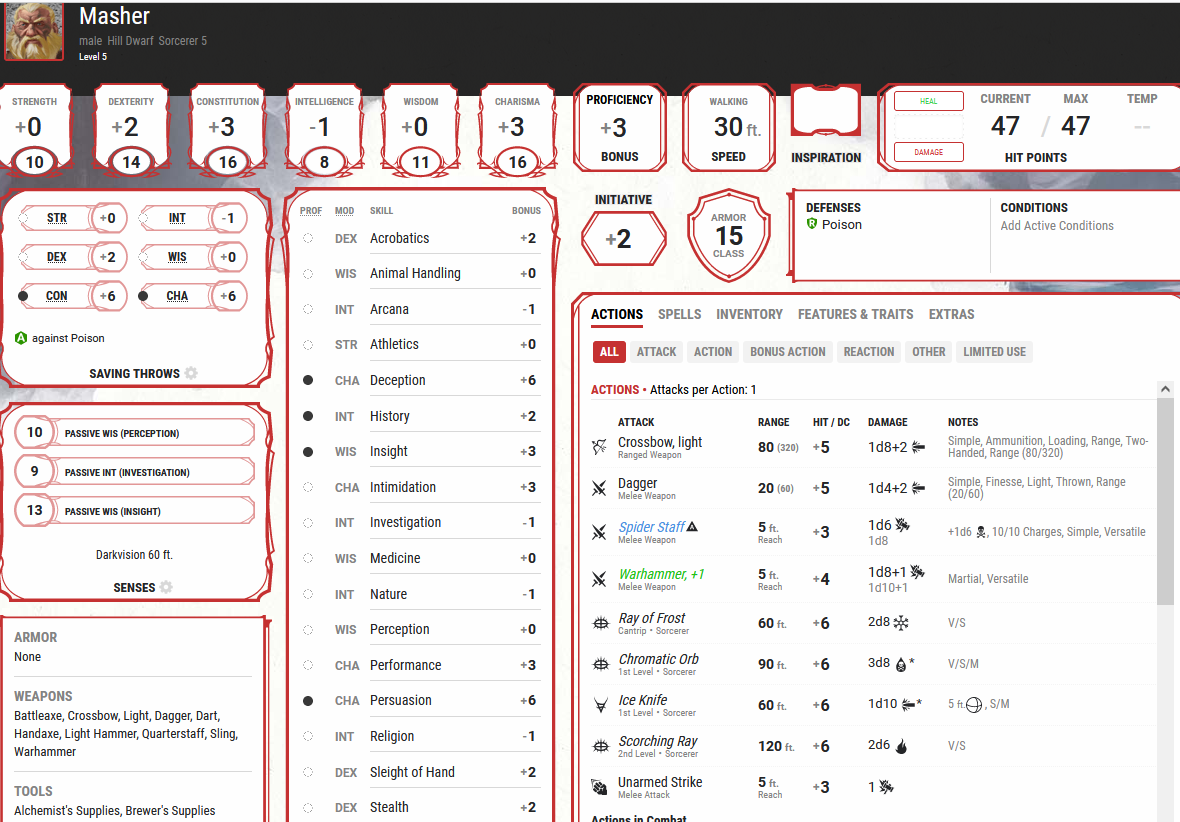
AD&D Masher
Probably among the most forgettable monsters of all time, these are 8HD 'worm-like' fish, dealing 5d4 damage and being covered in poisonous dorsal spines that mean it must be attacked from the front or below, lest the spines fend off attackers who must either abort their melee attack or save vs poison or die. They eat coral but are prone to attacking if surprised or threatened in "self-defense." It's not a bad concept for a monster, though it being underwater and just a fish limits the need to engage with them.

One might expect them to be popular sources of poison spears by the underwater races of Sahuagin and so on, but I see no mention of interaction with other sea creatures. In fact, apart from a lonely 2e wiki entry and a mention of dwelling in the waters of Raven's Bluff in Toril, they do not appear to have any internet presence.

Some random 5e character named Masher has about the same online presence as this fish on search engines


AD&D Manticore
An interesting creature, it can fire 4 volleys of 6 spikes, dealing 1d6 damage each at the range of a light crossbow. As they can fly, one assumes they soften up or slay foes at range, then close in to finish off whatever remains with their unimpressive melee (a regular ol lizard man is about equivalent if you ignore the HD difference) Their treasure type E is typically unimpressive- there is a chance of something good, but it is a low chance indeed. If nothing else, their iron tail spikes can no doubt double as iron spikes to shut doors with.

Manticores are an interesting tactical problem for low to-mid level parties- one must survive the volleys of fairly accurate (+6) spikes, then be able to defeat the creature before it flies away to end its aerial reign of terror, or find a way to track a flying beast back to its lair for treasure. They are of low intelligence but are 'Lawful Evil' which might imply deals can be struck with them, though it is unclear if they speak despite having human heads.

Sunset Realm Giant Lynx
Like most giant animals, the answer is 'sure, why not, there are many ways to become gigantic.'

nasty man

Sunset Realm Mammoth/Mastodon
See the Elephant entry. Most of them are found in the frozen lands of Fomoria south of the fault, driven ever further south by Deadliege expeditions to steal their bones and make necromantic war-constructs from them, just as what was done to their less-hairy elephant brethren in the warm north jungles.

Lungfungus had an interesting approach for these beasts statblock wise that I think I'll steal- failing a melee attack against one incurs 1d8 damage from trampling, as an automated way to make unskilled hunters better off on ranged duty and account for the bulk of the beast simply trampling people.

Sunset Realm Manticore
Goblinpunch already did a pretty great take which I am mostly stealing from.

Manticores are Nightmare creatures, born of dreams of spite and grudge. As Nightmare is closest to the waking world in Saresare, they are known to be residents of that desert sultanate, though they are often hunted and driven into Yuba, Fassulia, and Mercia, cursing all the way. Their faces are that of the host of the nightmare that made them.

They eat hard things, breaking their teeth and bleeding their gums, and incorporate those things as their tail spikes. Shards of bone, stone, and metal compose the quills of a manticores tail. Vomiting forth unsuccessful consumption leads to their lairs being foul smelling and messy, and frequently haunted by unclean spirits of disease. Harpies and manticores do not get along well, but are frequently found together regardless. They fear sphinx.

Manticores are generally unreasonable, growing more resentful of everything you have that they don't but can be satiated temporarily with slander and general nastiness. Politeness and care only pisses them off more. Aiding them with whatever grudge they are nursing is the only way to be allied with one.
If a manticore cannot kill you, it will follow you, harassing your friends, scaring off game, leading enemies to you, and worse if it can manage it.

If you are hit by a manticore tail spike, it embeds in you and you become poisoned by hatred. You cannot aid other people, and can only laugh at their misfortune, mocking them, listing out all your grievances and resentments towards them. Pulling out a spike deals 1 extra point of damage per spike, and you can pull out any number within a round as a full-round action, but someone with a spike in them certainly can't pull spikes out of someone else. Those who die, not from the manticore itself, but from the side-effects of this poison, will spawn a Nightmare incursion upon death which in turn will spawn manticores with their face. Manticores try to engineer these scenarios, knocking people off cliffs and then poisoning their friends and similar so they let them fall.

This poison is nightmarish in nature and only takes effect when the manticore hurls spikes, it can only be collected by things that can collect dreams or emotions.
Similarly, only their spikes are real- upon being slain, the manticore collapses and turns to nothing. Manticores do not have biology or ecology, and could indeed sit in a dungeon room for 100 years doing nothing but hoping to eat the next person they saw.


Wednesday, August 10, 2022

Mutation Megapost

There are three main problems with mutation charts I have been bumping into lately, so I made my own (with judicious amounts of ripping other people off of course)

Problem #1 was the style of mutation that just makes you ugly and persecuted by villagers (or at least have bad character design) but is otherwise largely pointless and easily forgotten because we don't have visual feeds on the theatre of the mind. DCC was pretty bad for this. 
Such mutations have a little more place in campaigns where mutations are basically just a punishment not a fun random table, but the problems of being easily forgotten due to no visual feedback persist.

Problem #2 was the style of mutation that gives you magic/superpowers with no physical component. It's kinda neat occasionally, but I prefer the sort of mutation that has drawbacks & a physical explanation to aid commonsense understanding, not just 'you're Jean Grey now I guess.' Allowing stuff like 'water control' makes players a bit too willing to become the X-Men by scumming mutation tables. On the other side of the coin, lots of mutation tables have entries that are more like curses, mutilations, or diseases, which I don't like for intruding on the design space of other tables.

Problem #3 was stuff that, well, suffice it to say that some things in the Metamorphica Classic don't read as 'mutations' so much as 'LotFP edginess fallout.' I didn't notice them for a long time but hoo boy.

MUTATION GENERAL RULES
There is a max # of mutations a character can get, to prevent them from becoming overly complicated/incoherent. I've been using CON as the cap, but level could also work if you wanted mutations to double as a corruption track that you can resist the more badass you are.

Exceeding this limit will transform a character into a monster, kill them, or most mercifully, simply replace existing mutations with new ones rather than adding to the character.

MUTATIONS
If something does damage and you roll it again, upgrade it by a dice class.
Poison can be 1d6 damage, death, paralysis, confusion, hallucinogen, etc, but only affects equivalently sized targets, requiring more doses per volume (about x8 dosage for x2 height/width)

1-Hands/Feet/Lesser Area
2- Legs
3-Arms
4-Lower Torso
5-Upper Torso
6- Head

  1. Blob- Body becomes gelatinous. STR & DEX reduced to 3, but immune to blunt damage and can squeeze through things. If rolled again, become an ooze who splits if hit by slicing damage instead of taking damage normally.
  2. Unusual Coloration- Albino, night black, leaf green, pumpkin orange, gradient pink/indigo, etc. Advantage to hiding in appropriately colored areas, disadvantage in high-contrast zones. Rolling again adds chameleon powers, which can provide nigh-invisibility, but probably only if naked and unmoving.
  3. Terrible Claws- Bird, lizard, mammalian, hooves, crustacean claw, fingernails, etc, replace 1d4 hands/feet. Deal 1d6 unarmed damage, 1 attack per free claw. 1/6 chance of feet instead of hands, 1/6 chance of both. Fine manipulation is difficult at 1d8, and impossible at 1d10+
  4. Fangs/Beak/Jaws/tusks/- Bonus 1d4 unarmed damage bite attack. Is a bonus attack in addition to other attacks if grappling/fighting unarmed. Rolling again increases damage.
  5. Armored Scales/Shell/Hide/Boneyness- Unarmored AC changes to 10+1d6. If combined with armor, add half of armor bonus to new unarmored AC. +1 AC if rolled again.
  6. Spiky- Armor must be specially made to allow for spikes to function. 1d4 automatic damage to beings that strike/grapple you with a vulnerable body part.
  7. Furry/Feathery- Counts as winter clothing. Requires x3 time to clean off gunk. Rerolling makes one 50% cold-resistant, but prone to heat stroke in non-arctic conditions.
  8. Tentacle- sprouts somewhere random. Acts as bonus limb.
  9. Lengthy- Body part can stretch/is 20 feet long. x2 Size on reroll
  10. Monstrous Pupils- Pupils change shape. Conscious refocusing allows shifting into infrared vision. Reroll can see invisible with conscious effort.
  11. Extra Eyeball- Increased field of sight, flanking penalty requires alternate angle of attack such as from above or below. Rerolling grants 1000 eyes on handy/inconvenient areas, making some tasks sensitive but making surprise nigh impossible.
  12. Giant Ears- hear enemy behind door, take 1 nonlethal damage from yelling/other loud noises.
    Surprise chance reduced by 1 if method of ambush mostly based on sound reduction. Extra magic ring slots in the form of earrings may be had.
    Rolling again allows for echolocation.
  13. Venomous- 1 unarmed attack mode can poison equivalently sized enemies, requiring about x10 doses per doubling of size to take effect.
  14. Gliding Membrane- as flying squirrel. Glide 1 horizontal per 1 descended. Rerolls double horizontal glide.
  15. Horns- Bonus 1d4 unarmed damage headbutt attack on charges. Free if grappling/fighting unarmed.
  16. Wings- Flight! 1/2 speed at light load, can't fly with heavy load. Weight restrictions removed if rerolled, but are notably large (30' wingspan)
  17. Fins- Swim speed as run speed. Doubled if rerolled, but replaces other limbs, RIP.
  18. Tail- Neat, mostly aesthetic, but other mutations may inform it being that of a scorpion, fox, lizard, etc. Rerolling adds prehensility, or an attack form.
  19. Quadrupedal- Can run on all fours at full speed. Slowed in bipedal stance.
  20. Giant Brain- +5 Int, but each point of bonus INT counts as 10 pounds/1 slot weight.
  21. Giant In General- x2 size. Doubled carrying capacity and melee damage against smaller beings. Needs everything special made at x10 cost.
  22. Poison Sacs- bulges spill poison if ruptured. Nearby targets save vs poison, with a +1 per point of AC from worn armor, and a -1 per point of damage if they bit you.
  23. Redundant Organs- If you are killed by piercing/poison/damage likely to kill via internal damage, survive, once.
  24. Nature's Pocket- +1 Inventory slot (internal).
  25. Eyestalks- Good for peeping around corners, under wide doorframes, etc. 3 foot initial length, x3 on rerolls.
  26. Exoskeleton- No bones, but exterior is hard. Lose -X max HP per level, but gain +X AC.
  27. Extra Head- Roll a new character to represent the head's skills and personality.
  28. Big Hands, gecko feet, spider legs, etc etc- Can climb at run speed on vertical surfaces and overhangs. Light load makes overhangs too dangerous, heavy loads make vertical surfaces too hard.
  29. Frog/grasshopper/bunny legs. Can jump run speed distances, horizontally, half vertically.
  30. Hump, fat deposits, etc. Excess food/water can be devoured and stored for up to a week without.
  31. Leafy- Leaves replace hair, or skin becomes green. 8 hours sunlight counts as a ration (but not water). Reroll includes flowers/fruits which are a poison/potion or at least a ration.
  32. Scrambled- Appendages/features in unusual spot. Commonly referred to as Zongism.
  33. Oh Worm- become worm. See if people REALLY love you, or if you must Shai-Hulud alone
  34. Tentacle Transformation- Hair, Arms, Legs, or Head become single/multiple tentacles. They are either small and poisonous, or large and strong.
  35. Extra Arms-2d4, keep lowest
  36. Centauroid- Fast but oddly shaped. Double carrying capacity and run speed, worse at climbing, turning quickly, squeezing.
    Reroll becomes Centipede-like.
  37. Cyclopean- Big eye collects light well (see twice as far in torchlight/starlight/lowlight) but has no depth perception (-4 to hit with ranged, double scatter distance for thrown oil, fireballs, boulders).
    Reroll- Entire head is eyeball.
  38. Smol- Half damage, carrying capacity, movespeed, etc. Can fit in lots of places. Stacks on rerolls.
  39. Petrified- Immune to physical combat damage from nonmagical weapons, level 1 spells, and monsters under 5HD (or anything deemed incapable of harming a statue able to defend itself). Cannot heal HP without Stone Shape/Stone to Mud/Mud to Stone shenanigans. Each reroll increases level of immunity by 1 stage.
  40. Vampiric/Trollish- Regenerate 1HP per round, but each HP recovered counts as a day without food which must be compensated for quickly to avoid starvation undoing all the healing.
    A human is about 10 days of food, roughly. Double rate with rerolls
  41. Fever- Body temperature can keep up to 8 people warm in cold weather camping. If rerolled, 1d4 heat damage from skin-to-skin contact.
  42. Thick Skin- Wrinkly, or toadlike, or blubbery. Unaffected by contact poisons. If rerolled, 1/week can shed skin to cure self of skin-based problems. Those wearing skin look like you as a disguise for a week of regular use, more if carefully preserved, less if used in strenuous activity.
  43. Sticky/Grasping Cilia/Prehensile hair- Things touching the mutant are automatically 'grappled.'
    If rerolled, mutant is so sticky that they cannot unwield or throw things. Gluey secretions ooze through clothes/armor.
  44. Slimy/Smooth- Mutant too slippery to be bound or grappled, escaping at the end of their turn.
    If reroll, can't grasp things effectively, climb or stand on smooth floors, near-frictionless.
  45. Gills- Breath water! If reroll, ONLY breath water....
  46. Acid blood. Reroll, Potion Blood. May also be lava blood, bug-blood, ice blood, etc for variety.
  47. Cold Blooded- Lose initiative in cold weather, Slowed (as spell) in very cold weather or if you take cold damage.
  48. Electric Generation- Can zap people for 1d4 damage on contact/conduction through water/metal.
    If rerolled, can arc 5' through air.
  49. Hermaphromorphic- Can change sex to various configurations.
  50. Musk/Pollen/Spores- Notable scent may attract or repel certain types of monsters (reroll CHA to determine opinions by species). Rerolling makes musk have poisonous effect. Leaves a trackable trail for those who find it repulsive or attractive.
  51. Hollow Bones/Lightweight/Gas Buoyancy -etc- Mutant weighs 1/10th of normal. -1 max HP per HD.
  52. Battle-Form/Adrenaline/Berserker- Upon entering combat (ie, making an attack roll or being attacked), effect is as potion of heroism. Exhaustion afterwards causes bonuses (save for temp HD) to be reversed until sleep can be had. 1/day, rerolling doubles uses.
  53. Bioluminescent- Glows as torch if nude, candle if clothed. Rerolling increases light radius.
  54. Mitosis- Can reproduce by splitting. Each resulting split has half HP and level but retain all characteristic and are distinct individuals.
    If rerolled, the splits may instead be drones
  55. Mighty Nose Hair/Dwarf Beard/Non-hairy filters- Protected from inhaled poisons, gases, smoke, etc.
  56. Silk- Can make silk rope, 10' per HP expended (metabolically intense). 100' of string, or 1000' of thread. If rerolled, silk rope can be extruded sticky or slippery.
  57. Elemental Affinity- 50% resistance to Fire/Cold/Electricity/Acid/Other Elemental Issue
    Reroll- Immune. Reroll again, heal from.
  58. Mighty Breath/Lungs- Can hold breath for an hour, and shout very loud and long. If rerolled, you can inhale tuns of air and inflate like a balloon, the sudden size increase frightening animals and surprising others (check morale).
  59. Hibernation/Cocoon- Mutant may sleep for set times, and cannot awaken. While in this state, food/water is not needed, healing doubles. If rerolled, lost limbs may be regrown, diseases cast off, etc etc, at a rate of 1 such healing per week.
  60. Herbivore/Carnivore- May only eat plants (but can eat things like grass) or may only eat meat (but may eat it raw/somewhat bad safely). If rerolled, both apply in super-omnivorousness. Rerolling again allows consumption of anything organic safely. Rerolling again, anything physical. Rerolling yet again, anything.
  61. Worm Mouth/Mole Claws- May tunnel through soft earth/sand at half speed. Rerolling means hard earth/soft stone may be burrowed through, rerolling a third time allows for even worked stone/bedrock to be bored through.
  62. Acid Expulsion- vomiting,  range as thrown dagger. Previously swallowed objects/liquids act as projectile. Rerolling adds 1d4 acid damage.
    Getting hit in the stomach forces a save vs poison or vomiting.
  63. Eyeless- Blind. Reroll becomes faceless. Grues will not hunt you.
  64. Breath Weapon- 1/day, random type. Deals 1 damage per HD. Rerolling adds 1 use and 1 damage per HD. Save for half.
  65. Steam/Ink/Smoke/Dandruff- may emit an obscuring cloud 5' radius. 
  66. Piezoelectromagnetism- Can sense magnetic/electric fields with concentration. On earth-like worlds, allows for finding north. Rolling again grants 30' range ferrokinesis (with INT as STR)
  67. Transparent- Invisible flesh. Only really works if not carrying anything at all. Handy for seeing parasites, effects of swallowed potions, etc.
  68. Fungal- If killed, explode in spore cloud, 10' radius. Those failing to save are infected by you and you live on in them, able to make them take 1 action per day. If the infection is not cured, you replace their brain in 1d6 weeks. On reroll, corpses are also infected and raised as fungal zombies. Multiple copies of you are philosophically troublesome.
  69. Hideously Ugly- Those beholding you must check morale or flee in terror, and may assume you are some kind of monster. If rolled again, it's a save vs magic or fear.
  70. Manticore Spines/Fingerbone spurs/Blowgun tooth- You may attack for 1d8 unarmed (range as throwing dagger) by throwing bits of yourself. Ammo regrows slowly, so each shot costs 1 CON damage. The first time you do this to someone it counts as a sneak/surprise attack.
  71. Nerve Interface- Touching another creature for 1 whole turn allows you to link to its nervous system and feel what it is feeling, and vice versa. On a reroll, you may read its mind clearly, and if rolled again, you may control it.
  72. Enhanced Vocalizations- You can be loud, musical, a mimic, or a ventriloquist with ease. On a reroll, you may shriek for 1d4 damage, syattering glass and similar.
  73. Egg- Assuming you are well-fed, you lay an egg every week, much like a chicken. Counts as a ration, is not cannibalism unless fertilized and allowed to develop significantly.
  74. Corrosive Sweat/slime- Metal rusts, corrodes, and crumbles if touched by you in stressful/exercise situations. If rerolled, this extends to organic substances like leather, cloth, etc.
  75. Sucker/Elephant/Duck Feet- Wide distribution of weight foils many pressure-plate type traps. Unfortunately, still a bit slow- 1/2 speed.
  76. Skeleton- Vital organs and functions retreat inside bones, making flesh redundant. Attacks that cannot break bone cannot kill you (though they still do damage otherwise) and enemies are likely to believe you dead at half-HP or lower.
  77. Fire Extinguisher- Upon taking fire damage, pores shoot forth expanding white foam that cannot burn and smothers flame in a '5' radius. x2 Radius on rerolls.
  78. Homunculi Colony- Internal organs replaced with 1 little person who has 1 giant appendage for each appendage you have, forming your arm, your head, mutant tails, etc. They may separate to perform important tasks, but are misshappen and better off working together as 'you.' If slain individually lose 20% max HP, XP, statistics, etc.
  79. Pseudothanatism- Albinism, 1d6 damage per turn from sunlight, undead can't tell you're alive until they touch you.
  80. Udders- Can feed most baby mammals milk. Other creatures probably allergic. -1 Con=One Ration's worth.
    Rerolling increases efficiency, allowing 2 creatures to be fed for -1 Con.
  81. Long Tongue- can grab things like a frog. Rerolling makes it prehensile as a hand. Tends to not fit in your mouth. 5' length by default, doubles each reroll.
  82. Vents- Tube growths that can expel poisons, diseases, parasites, curses, etc affecting the mutant (they are not cured, only spread.) On a reroll, the range increases to that of a trebuchet.
  83. Flammable- All bodily fluids function as lamp oil (1HP per hour of light for blood). Always catch on fire when taking fire damage. On a reroll, functions as napalm.
  84. Extra Mouth- Back of head- Talks, demands food, or, Stomach- huge, can eat a whole chicken. Hand- Spooky, convenient for eating.
    Reroll- 1000 mouths all over. !d6 bite attacks each round in grapples, 1 damage each unless you have fangs etc.
  85. Turtle Appendages- All appendages can be retracted into the body, protecting them from being targeted (or used.) If rerolled, body can be retracted into appendage.
  86. Long Nose- good for sniffing, or using as a breathing tube. Common target of slashing weapons.
    Reroll- prehensile like an elephants, counts as appendage.
  87. Gobbler- Can unhinge jaw and swallow things up to twice your size given a turn, though you still must count their weight for encumbrance.
  88. Bloody Eyes- Weep blood. Can also shoot blood (-1 HP) from eyes to blind people briefly (1 round, automatically hits the first time you trick someone with this.) If rolled again they act as pressurized water cutters, only deal 1d4 damage but can punch through metal.
  89. Antennae- Very sensitive. Can detect air current movement of invisible creatures/drafts.
    On a reroll, they can ID illusions and imposters (like doppelgangers) with investigation.
  90. Unstable- Reroll one other mutation every day.
  91. Exotic Presentation- Reroll 1d89 twice, combine results into new, single mutation.
  92. Malignancy- Reroll 1d89, it manifests in a highly detrimental way, even reversing function if need be
  93. Solidarity- Reroll 1d89, there is a mutant colony, decrepit noble lineage, secret bloodline, etc etc of which this mutation is a hallmark.
  94. Contagion- Reroll 1d89, this mutation is contagious due to being symptom of disease, curse, etc
  95. Beneficial- Reroll 1d89, it manifests in a positive way, regrowing limbs if necessary, not interfering with other character quirks, and if nothing else being healthy and good-looking rather than grotesque and unsightly.
  96. Path of Evolution- Reroll 1d89. All future mutations upgrade, enhance, or otherwise follow a chain of logic based on this evolution, seeking to transform you into a new kind of being. Could be an existing monster or not.
  97. Chimera- Become fusion of [YOUR_SPECIES] and a monster, ideally based on existing mutations if there's any theme.
  98. Final Form- Upon death, immediately explode into a full-strength monster, ideally based on existing mutations, otherwise random+ existing mutations.
  99. Darkspawned- Every player present comes up with a mutation. 50% of picking one randomly, 50% of gaining all. 
  100. Ok Fine A Little X-Men as a Treat- Find a 'random superpower generator' and roll on it, or just have everyone pick a superpower and then select one.

Sunday, July 17, 2022

Campaign Retrospective: Wizard College review & Heleologos Academy Graduate GLOG Class

The GLOG wizard campaign/playtest has concluded, or rather, I burnt out on it due to, as one player put it, "There was hecka Standford Prison Experiment level of Role Acquisition with our player base". Even so, a lot of valuable information was gleaned from the ~14 weeks and ~42 sessions I ran for the three sub-groups. I've roughly updated the original document post to reflect those design changes.

The general principle was a wizard college, recently burned by sea raiders, was being restarted, run by the Headmaster Great Doctor Ogudugu/Dread Sorcerer Ugudugo in a Jekyll/Hyde scenario that a past campaign engineered. The players were set to defeat 5 wicked wizards terrorizing the land, recover lost secrets, and train students in WIZARDRY, and they accomplished about half the tasks set before them, as the campaign ended about half-way through the year time limit. The players were split into several groups, which were roughly the goody two shoes, mustache twirling villains, and morally ambiguous middle ground. This immediately led to us vs them mentalities developing. I think future 'same campaign, multiple groups' will have to be clearer about it not being a matter of 'sides' so much as 'manageable player group size' if the groups are occupying the same fictional space and thus prone to interacting, directly or otherwise.

Class wise, the group consisted of a
Cauliflowomancer (custom by player)
Alchemist (custom by player)
Hellknight
Many Wizards
Telemancer (Two of them, though due to shenanigans only one really used the base spells)
Somnambulist
Fey Wizard
Toxinist (Dropped campaign early)
Relic Seeker
Geometer
Lenguamancer


The players engaged in a fair bit of ridiculous wizard shenanigans including, but not limited to
-Accidentally causing triple tsunamis with meteors, wiping out a magic sandcastle and putting coastal settlements into crisis for weeks
-Creating a Pig Cult and awakening pigs to citizen status
-infested campus with, at various times- boreholes, clay pigs, frost imps, mimics, intelligent trees
-Reawakened a volcano
-Hastily cooled the lava off with storms of soapy water
-Turned a pirate wizard captain away from evil via the use of jekyll/hyde potions
-Set up a secret teleport circle to the mainland
-Hired two Ogre Magi onto the payroll so they'd stop eating people

Some thoughts that emerged in play, in no particular order. There are many small changes (like mutation for 1 day instead of 1d6 rounds) that have been retroactively implemented into the prior 'tl;dr' post, as I hope to spare anyone using those rules some of the troubles that afflicted my campaign.

-Spellbreeding procedures are fun, moreso than typical spell research rules. Slapping some extra limitations on how often they can be used should mostly solve the prime problem I encountered where 'sit in tower and do spell research' was more rewarding than actually adventuring.

-GLOG classes, more specifically spell lists, seem to be very self contained, without an implicit understanding of learning new spells. While that's fine especially for shorter-lived campaigns, I think a lot of gaps between 'AD&D spellcaster progression along 20 levels' and 'GLOG caster progressing along 4 levels' exist and may need filling.

-GLOG spells that depart from the lowly realms of [sum]=damage formula and attempt to emulate spells in the level 3+ range may need additional limitations even beyond that of 'but what if you roll a doom.'  Prime offenders are summoning spells, transformation spells, 'death' spells, teleports, and many things with permanent effects. One design flaw I exposed with certain spells was similar to the issues I had in Esoteric Enterprises- if short term resources (MD) can be used to solve intended long term consequences (mutilation, mutations, curses, death, etc) and the only limitation upon those spells is the threat of more long term consequences, the long term effects become nothing but pointless busywork that eats up a day of MD at worst, and the intended limiter of the spell becomes irrelevant.

-Material components must be quested for, not bought, or town becomes a more important locale than the parts of the game where adventuresome things happen. While sending known mercenaries or retainers on quests to retrieve goods could be fine, allowing the sort of impersonal transaction of magical goods for mere coin turns things in a "Industrial Magic Revolution" direction pretty quick once you ask 'why aren't NPCs doing this too.'
Powerful spells that burn through ingredients, then will require more questing or shenanigans to acquire more of, is one such limitation upon glog spells.

-Gold Costs for 'lesser' components is potentially fine when it's just a kind of abstract purchase for baseline functionality of something, like crushed pearls or gold-dust infused ink. The sort of thing that makes magical efforts expensive and unable to be infinitely replicated by say, a printing press, and attaches to coin for xp economies easily. Small gold prices for certain spells can limit them effectively when they can pretty much always be cast in session, but cannot be cast every day for a month with your spare MD to bring about some effect without incurring financial problems.

-Limiting casts of a spell to be within a certain time frame (the main example being a teleport that could only be cast once every 24-[sum] hours) helps encourage single large casts rather than smaller 'spam' approaches that bypass miscast/dooms/mildly inefficient MD use. This is to some degree just reinventing the wheel of classic Vancian D&D casting though.

-Minimum MD investiture- When used as a 'you might get a doom' drawback, this may become a toothless warning if players avert their doom or treat their character as a pawn rather than a character.
I think it becomes more interesting if the MD investiture is not merely a 'doom' threat but a 'how do I get to 6MD' problem. If nothing else, requiring a minimum MD investment means it eats up more MD than usual.

That's most of my thoughts on my deep dive into a GLOG style magic system this campaign. All in all I'm not sure I've made a proper bridge between 'you get some random spells from your glog class and level 4 is the cap' and the level-based power scaling of an AD&Desque wizard.
But such a bridge is worth building I think, because while GLOG casting is cool, it doesn't match well with certain monstrous bestiaries math-wise or long term campaign stability if every level 4 wizard gets to break reality and then die of a doom.


-While it is certainly possible to run three days a week, it is less plausible to be able to keep abreast of required prep for three groups in the same world if they stray from existing prep and goals and truly start to turn into 'three separate campaigns.' So being more clear whether campaigns are more ordered railroads or sandboxes is something I'll communicate more.

-While considerably more work, I think the central megadungeon of a campaign requires more careful level design than what most online generators are capable of. Filling a Donjon-generated dungeon with appropriate fills doesn't solve the general weirdness of the layout, so there's not a lot of rhyme or reason when it comes to exploration, nor are there things like 'giant bridged chasm spanning 3 layers.'

-I forgot to include weather mishaps, which led to players marching through rain like soulless automata. Adding things like slipping and falling (annoying in plains, deadly in mountains), inventory items(like spellbooks) becoming moldy from leaks and soaks, frostbite, avalanches, and so on  are important.

-Milestones have decent potential for non XP based advancement I think, but I think they have to be tweaked for each campaign. I was kicking myself for not including the campaigns 'story goals' as milestones and instead using a more generic list- that would have helped keep things focused.


HELEOLOGOS ACADEMY GRADUATE SPELL LIST


  1. Arzhangs Astonishing Automatic Laundry
  2. Forecast
  3. Celestial Trumpeters of Elsewhere
  4. Animate Glass
  5. Lily's Mysterious Mastermind Mining Minions 
  6. Fulgurous Fairy Dismemberment
  7.  Great Storm of Pig Awakening 
  8. Extremely Warm and Legally Distinct Cutting Surfaces of Nanci 
  9.  Borehole
  10.  Immovable
  11. Lolilores Merely Human Tongue
  12. Matterhorns Champagne Fairy


  1. Arzhangs Astonishing Automatic Laundry
    R
    : 30' D: Instant
    Cleans [dice] targeted outfits with soap and water, then hangs them to dry on most appropriate area within range. If said outfit is currently being worn, the wearer gets a save to avoid their outfit being stripped, but will still have the outside soaked and scrubbed.

    A necessity for keeping robes fresh and the student body tolerable in the jungle heat. While it has combat applications, experimental castings to remove knightly armor  is kept secret from said knights.

  2. Forecast
    R
    : sight; T: the sky D: Next Week
    You know what the weather prediction is for next week. You can shift the predicted results on the 2d6 weather table roll up to [Dice] amount (or whatever seems appropriate given weather rules.

    After seasons of pestilential rain, the staff demanded the headmaster end the floods, and this tradition continues to this day, ensuring the headmaster of the school is responsible for addressing foul weather.

  3.  Celestial Trumpeters of Elsewhere
    R:
    Sight T: The sky D: [Dice*2] Hours
    A host of musician-spirits are called from an appropriate afterlife to perform. The glowing host illuminates equivalent to moonlight and traverses the sky similar to a meteor, spectral tunes drifting down below.

    This spell is mostly used as entertainment for outdoor court parties, though during the Enlarge Wars it frequently became an enabler of night raids and signal flares, and is far from a mere parlor trick.

  4. Animate Glass
    R:
    Touch T:Glass Item D: [Dice] Tasks
    Animates a piece of glass. It has max HD equal to [dice*2], but this is dependent on the size of the glass. After the tasks expire, if not commanded to become inert, it will behave as its form implies- glass birds fly around and peck at seeds, stained glass monks may preach, etc etc.

    This spell, developed in Ynn and later refined with golem-crafting principles, is popular due to aesthetic appeal, limited usage, and utility in stained glass window repair. There is rumored to be a very unsafe version known as Glass Demon bound in the cooled lava of the volcano, a necromatic corpse-and-glasspane horror mishmash derived from the soul of a murderous quicksand nymph vitrified and called forth.

  5. Lily's Mysterious Mastermind Mining Minions
    R:
    Shouting distance T:Patch of mud, soil, or shit D: [dice] days
    Summons [sum] demonic, imp-like creatures, commonly called knockers or borehordelings, who are equipped with mining helmets, shovels, and pickaxes. While loyal, they are tragically stupid, cowardly, greedy, and generally useless, but they can still accomplish anything [sum] idiots could do in [dice] days with that gear.
    Each minion can dig through about 85' cubic feet of very soft rock/earth, 65' of soft rock, and 30' of hard rock in a days work.

    The ironic name has led many a wizardly building project to go awry, but the additional labor force is helpful... if supervised.

  6. Fulgurous Fairy Dismemberment
    R: 50' T:
    Ear, finger, or similar small bodypart D: Instant
    This spell takes the form of a small, lightning-shrouded,blade-brandishing fairy who removes small bodyparts on a failed save. It is cast as a Cantrip, so all invested dice are set to 1 instead of rolling.
    The wound is cauterized by lightning so bloodloss is not an issue, and there is a -1 to save per point of metallic AC + metal item worn.

  7. Great Storm of Pig Awakening
    R:
    Sight T: Sky/Ceiling D:[sum] hours
    Magical rain falls from sky/ceiling for the duration.Pigs in the rain gain human level intelligence.

    This spell, while mostly included due to the Three-Tusk pig cult, is nonetheless handy to water crops, disrupt travel, and produce water in dungeons.

  8. Extremely Warm and Legally Distinct Cutting Surfaces of Nanci
    R: n/a T: Self D:[sum] round
    Summons a mystical mirage-heat blade of reflection that hits as a longsword with +[dice] to hit and damage worth of fire damage. It deals double damage to anything you love. This is battlemagic, which means that you may cast and attack with the summoned weapon in the same round.

    Additionally, the blade may be used to reflect 1 incoming attack per round, with a 50% chance of success... but if a reflect attempt fails, the attack automatically hits the wielder, and/or a save is  automatically failed.
    Reflected attacks preferentially target anything the attacker loves and deal double damage or effect to them, or returns to the originator for normal damage/effect by default.
     One effect may be chosen upon cast per [dice]
    -Gaze Attacks
    -Melee Attacks
    -Ranged attacks
    -Hostile spells
    -Fear Effects

    This spell, more commonly known as the Ruinous Flameblade, is said to have been drawn from the torment of those who died in the burning of the library, and is strictly forbidden from being cast in the library, lest the flames return.

  9. Borehole

    [R]Touch [T]1 person or section of floor [D] [sum] Turns, permanent on 4+dice

    A perfectly circular hole is bored. In a person, this hole leads to their dreams. On a dead person or undead, it leads to a nightmare realm. In a structure, the hole leads down 1 level. If there was not anything below, a dungeon is spontaneously created. The hole closes after the time is up, but any generated realms remain, and the nightmares beneath will likely maintain an exit for their monsters.
     
    Due to an infestation of these nightmare wisps and general good use in dungeon delving, this spell became prominent in Heleologos as well as in Saresare.
  10. Immovable
    [R]Touch [T]1 item [D] [sum] Rounds
    Holds an item in place as per an Immovable Rod. Items held by others get a save.

    While Mr. Daurondo had a variety of obscure frog-based curses, this contribution was deemed more generally appropriate to the curriculum.
     
  11. Lolilores Merely Human Tongue
    [R] Depends on air/water currents [T]Metal/Magic [D] Until recast
    Allows the caster to taste the air and locate metals and/or magic. By tasting the air for something you have smelled before (such as gold, magic smells, etc) you can follow it like a bloodhound, or at least become aware of the nearest item.

     Derived from the multiple dragons the Academy defeated, this spell mimics their uncanny ability to sniff out treasures. During the enlarge wars, it was also used to follow troop movements and avoid ambushes.


  12. Matterhorns Champagne Fairy
    [R]Touch [T] Water [D] Permanent
    Another Ynn-derived sorcery, this perpetually soused fairy transmutes enough water into champagne to get [sum] people tipsy. That contains a very faint featherfall effect- for each point of drunkenness, the inebriated takes 1 less fall damage.

    Drunkenness Rules- Each point increases critical hit/critical failure range by 1. After your first 'free' point, drunkenness in excess of your CON bonus forces a save vs poison, failure indicating blackouts, passing out, and general alcohol poisoning and uselessness.

Monday, May 16, 2022

Lycanthropes

AD&D  Lycanthropes


Werewhatevers are pretty decent foes, though they are accursed with the problem of 'why can't lycanthropy be used as a power-boost for my character' that has plagued GMs since their inclusion. The excuse of becoming evil even while not in wereform does not dissuade some characters, is sorta suspect in general, and doesn't even apply in all cases since werebears are chaotic good, and wereboars and tigers are at least neutral.

The curse is simultaneously easy to get (taking 50% of HP damage or more from a lycanthrope) difficult to remove (requiring either a 1/4 chance of belladonna curing it but poisoning the character for 1d4 days with a 1% chance of death) or a level 12 cleric to cast cure disease within 3 days of infection. So the question of what to do if a player is infected is a common one.

As far as the different varieties go, Werebears can cure disease and are probably a reference to Beorn of Lotr, perhaps combined with the figure of Bödvar Bjarki. They also work with brown bears, which seems less likely than working with other infected but whatever.

Wereboars are the most inexplicable to me. They are neutral but foul tempered and likely to attack, and I am not at all sure what they might be a reference to mythologically.

Wererats are suprisingly tough with 3HD and are almost certainly a reference to Hisvet and her ratty friends from the Fritz Lieber books of Lankhmar, and are a staple of the urban sewercrawl.

Weretigers being 'most often female'  makes me think they're likely a reference to a specific character rather than a mythological category. Hantu Belian are a malaysian possibility of origin inspiration, but it seems less likely. Or maybe the artist just really wanted to draw tiger teats in the art, idk.

Finally, werewolves are obviously derived from mythology and hammer horror films (as I guess from the artwork) and are most divergent in that they are quite pack-oriented as opposed to the lone accursed fellow-3d6 werewolves being the average number-appearing, rivaled only by the 4d6 wererats.

All in all, there is a disconnect from the desire to have lycanthropy be an alienating, isolating curse, and the apparent small gangs of these creatures getting up to a wide variety of alignment-appropriate activities and social interaction. They're plenty dangerous to adventuring parties with multi-attacks and a tenacious curse. One wonders if slings loaded with the incredibly numerous silver coins would provide ample defense even to peasantry against such threats- even in a copper standard, where money is 100 times more dear than the gold standard, silver is not some exotic metal to be carefully sought after and hoarded, it's just something you could presumably get from the coffers of any business, so their weakness doesn't hold the same problem as the modern werewolf film.

All in all, I think 'the curse of the werewolf' idea doesn't hold up well in a D&D universe in terms of logistics or implied setting... it's either a known problem with known solutions and is thus free of any supposed horror, or too easy to manage and suddenly it's a supersoldier serum, or it's a campaign ending blight akin to a zombie apocalypse.

Sunset Realm Lycanthropy


Clockwise from top left- 6th age superhero squad of Yuban Cynocephali, yuban weretiger or
possibly grumpy were striped-cat, horrid bear-scourged Blood Beast,
6th age rat-descended PASCC agent, slaughterhouse pig-spirit possessed butcher.
Not pictured- me having any motivation to draw

There are several types of shape-changing beast-folk in the realm

Firstly are those of inhuman ancestry, manifesting not as the more typical permanent hybrid form, but as having multiple forms + a 'best of' combination. The 'immunity' to weapons comes from the ability to heal wounds by transforming to some degree- limbs may not regrow, but wounds will close. Wounds inflicted by silver may carry over between forms, the lawful metal refusing chaotic undoing of its deeds, or serious injuries or bindings of silver may prevent transformation all together until healed/removed.
This form of beastliness is not contagious, but it is heritable. Transformation is typically based on stress or focused will.


The second form, that of Curse, occurs thanks to possession of a human body by an animal spirit. The transformation is hideous here, as one form is distorted, broken, then 'healed' into another by the unnatural vigor of two souls within one body.
Horrible crimes against animals may cause vengeful beast spirits to possess the offender, turning them against humanity as vengeance-by-proxy. This is quite unlawful, which is why silver is effective. The other main source would be being cursed by the gods- Our Lady of Gardens inflicts this curse against those who completely defile and disregard her society, granting them an unsightly form to match their behavior, and allowing others to hunt them as they please. This curse is not given lightly- Our Lady must cooperate with her rival Murulu, who is lord of such corruption and transformations, or with Lumar, who can mimic Murulu's powers, and explains the association with the moon such beast curses have. Lumar may inflict this curse whilst mimicking Our Lady as well, though the mysterious goddess likely does so with ulterior motives like the beast accidentally burning down a library or slaying those who know secrets when the moon arrives. Either way, the beast-soul assigned to torment the accursed is assigned as punishment, so attempts at harnessing the beasts powers are doomed to failure as the beast will thwart the accursed in every way possible. Typically, this curse is not contagious when god-granted, unless the punishment is meant to spread to the allies of the accursed as well. However, especially in the case of punishment by beast-souls, the soul may splinter itself into nightmare fragments to propagate and may well be a contagion.
Either way, the curse can only be lifted by mollifying the gods or the angry animal spirits, so there is no one-size-fits-all cure besides death by silver.

The third form, that of Blood, is a disease, of sorts, a contamination borne of the combining of Moon Blood and the blood of beasts, then introduced to the human form via injury or improper blood transfustions not sanctioned by the Sanguine Church of Vint-Savoth. This form taints the mind with bloodlust, and deforms the body with foul mutations that are related to the animal blood in question, but are ultimately alien in origin due to the source being the Blood Moon. If full transformation occurs, there is no going back- that person's soul is gone at best, or trapped within a raging monster of the Blood Moon at worst, hoping to save its comrades if it can wrest back control for even a second.
Such beasts are best slain by fire, silver, or massive bloodletting to drain the corrupted blood from its host.

As far as location of the 'standard' werebeasts goes...

5th age Oroboro had the first form of Werewolves in the hills, a clan sworn to oppose the villainous wizard who lives in those parts. They may date back to the 4th intersolar period, where humans seeking to survive the sunless darkness mixed bloodlines with wolves. It is unknown if they survived the Enlarge Wars, but they likely would have been forced to become more urban.

4th Age Phillipston was initially human, but was overrun by wererats of the accursed sort after the power of the Riikhites and Mokkhites was broken. These wererats date back to accursed experiments by Sarkomand early 4th age. By the 5th age though, the curse had weakened such that the ratty population was essentially the non-dangerous 1st variant, though prejudice lingered for generations, leading Phillipston to be fairly insular. The 6th age Phillipston Anomalous Subsurface Control Committee, or PASCC, was also known as the Rat Race due to high numbers of rat-folk signing up for the dungeon control and exploration teams.

4th age Yuban "werewolves," actually weredogs known as Cynocephali, were sacred, rather than accursed warriors of Yuba who fought back against Riikhite Mercia, and were demonized for it. In the 5th age imperialism had diminished, but Cynocephali still had enemies in the form of the Cat Lords or Rakshasa, who created accursed weretigers to serve as a counterforce in bloody internecine conflicts as Yuba tried to reunify after being broken in the 4th age. By the more peaceful 6th age, werebeasts had receded into being more of the first variety than the supernatural variety, with those who engaged in battle frequently forming public color-coded super teams.

While Vint-Savoth was scourged by the Blood Moon even before it had a name or was settled, and as such has every variant of the 3rd type of werebeast and more, it may be worth noting that even in the 6th age after the Blood Moon was felled and largely contained, werepigs of the 'angry beast soul' variety rose up against factory farming as horrible chainsaw-wielding pig-men until, as happened in Prince's Spit with the Three Tusk revolts, the inhumane practice was ended for good.


Actual Rules I use for Lycanthropy
If forced to roll on the Death and Dismemberment table by a contagious-type werebeast, lycanthropy is contracted on a failed save. If killed, one may choose to contract lycanthropy instead to save ones own life, though it cannot be cured save by magics comparable to that of raising the dead in that case.

Ancestry Type-
This type would be run as a 'race-as-class,' perhaps multiclassed with a more standard class. The Spook from Esoteric Enterprises would probably work, with Grit HP regenerating quickly due to transformations clearing wounds, and Flesh HP being struck directly by silver weapons.

Curse-Type

Transformation occurs upon the curse's trigger- moonlight, witnessing appropriate animals being eaten by humans, etc etc, and upon periods of great stress, physical or mental- failing a save vs fear or being reduced to low HP, for instance, likely trigger a transformation into the appropriate statblock, healing all non-silvered damage and, bursting out of armor, backpacks, clothes, etc and destroying them.

Characters with equal or fewer HD than their beast-form cannot control it or remember what they did in any detail. The beast is typically unnaturally violent.

Characters with more levels/HD than their beast form can control themselves to some degree and can make saving throws to prevent themselves from attacking allies while transformed, and can act with some direction beyond 'accursed rampage.'

Characters with at least double the levels/HD of their beast form are, against all odds, able to go beastmode at will and can control themselves, though the transformation lasts until next dawn. Essentially, it is only a weird superpower at this point.

Magic items meant to aid in control, or perhaps unusual mental stat modifiers, may count as bonus or malus HD for purposes of controlling oneself. Each year survived with the curse probably adds a 'virtual' HD for purposes of controlling oneself as well.

Blood-Type

This is more of a corruption track, as once transformation occurs, the soul either leaves, or stays within the body, able only to take control for a total of 1 round per level ever before control is lost forever.

Every time corruption is gained and corruption > level, a save vs scourge must be made the next time great stress is felt, mental or physical. Failure indicates transformation into a beast of HD=Level+Scourge.

Scourge Track- The stages roughly corresponds to what percentage of blood is pure moonblood, as opposed to what percentage is corrupt beast blood.
0- Unsullied- No exposure to the scourge
1- Acceptable levels. Scourge never goes below 1 after initial infection barring incredible magics or mad science.
2-4- Hunter-Acceptable Levels- Scourge Level provides various advantages if the right techniques are utilized. The Church issues tags confirming blood status to sanctioned hunters.
5+- Public Menace Levels- Berserk bloodlust clouds judgement. Must make a saving throw to not consume blood or stop attacking targets in melee. Mild physical transformation such as elongated hair, teeth, nails, eye color changes, mucular growth, etc. It is not unheard of for very skilled hunters to lapse into this state on particularly long or horrible hunts, and rumors abound of secret church forces who have tags sanctioning blood corruption of 5% and higher.


Common Scourge Sources
+1 Skin contact with scourged blood. First-time only.
+2 Internal contact (ingestion, wound contamination, transfusion) with scourged blood of higher HD source/Scourge level than your own.
+1 Making a Death and Dismemberment roll. Only applies if you have at least 1 Scourge. Counts as 'great stress' so immediately check if a possible transformation is in order.
-1 Monitored bloodletting and transfusion by the Sanguine Church over the course of a week. Counts as 'great stress' for potential transformation, though the Church typically euthanizes transforming unfortunates before they get out of hand.

Monday, April 18, 2022

Prep for Starting Campaigns

 Players wanted this post so I vomited it forth in like a few hours, I'm mildly dissatisfied with it but oh well

I definitely had my share of campaigns dying after 3 sessions back in the bad ol days of being 12 years old. But in my time as an online GM, I feel like I've had a pretty good success rate in terms of campaigns I make being fairly long-lived and usually reaching conclusions of some kind rather than fizzling out. Part of that is simply that, apart from random freelance word and art stuff,  this is what I do, so I have far more time and energy to devote to a campaign compared to people who have jobs or relationships or children or whatever. 'Become a minimalist neet freegan D&D ascetic' isn't really applicable advice for most people, but I feel like it should be mentioned as a caveat or disclaimer.

I have an advantage of having slowly grown a group of regulars, one or two from each new game, who seem to generally enjoy my GMing style. There is a level of trust and shared experience here that random roll20 or OSR discord pickup games don't have, heck, even when my players run for each other, the dynamic changes and so there's more chances of flaking. It could be that there's no meaningful procedural difference in how I start games compared to how others start games, and it's more a matter of social dynamic than anything.

And as final caveat is that players will sometimes just lose the ability to play for whatever reason. We've all been in games killed by scheduling, I've been the player in games who just came less and less due to diminishing interest even in games I thought were good (Acodispo and Spwack's games come to mind), etc etc. Games are not immortal* and I think a good step one when making a campaign is to think 'what would be a good point to end this game on' because if you know roughly where it is going, you may get an idea of where a good place to start it off at might be.

*the open table flailsnails multi-gm shared universe meta-game my server engages in might be immortal as it doesn't have the same death-conditions as regular campaigns but I digress


But for what it's worth, here's the process I've gone through


Initial prep for campaigns usually is a sort of slush pile of handwritten notes written while I donate plasma. This initial slush is anything... 'anorexic centaur noble shamed for her natural weight by human villain who is a toxic friend' 'alternate dungeon entrance is gay pirate brothel' 'time loops for free character revives' 'biomechs actually are nanite swarms mimicking life' 'hot frog' etc etc

I think it's helpful to get these half-formed ideas noted down, so your brain can either move on, or properly start to develop them further. My brain, at least, can chew on a half-formed thought for a very long time without really advancing it anywhere or seeing problems to fix.

Then comes the more serious prep- where 'castle overrun by frog cult' has to actually become a map with notes on what's in each room and so on, 'fairy forest' has to actually get an encounter table and some hex fills, and so on. While you can go wild with big hexcrawls and megadungeons prepped in advance, I think it will usually pay off more to go more in depth with nearby stuff first- prep some town NPCs in the starting village instead of the next town over, add some small 'quests' the players can do, and let distant lands be more vaguely sketched so as not to expend prep.

Also, have minidungeon modules and/or procedural content generators ready for when the players go somewhere less-prepped. Random encounters go here I suppose, but I think they're very good shorthand for populating a world. If I could only prep one thing, I would prep a wandering monster table and treat everything I roll as though it was something I placed on purpose, with motives and backstory and connection to other known things.

Similar advice applies to games with more linear story arcs- prepping the whole thing in advance leads to railroading, so having a vague idea of story beats, but only actually prepping 1-3 sessions in advance lets you keep things reactive to the PC's actions and allow for them to execute their own plans, while still generally heading towards things like 'defeat Ser Hotsalot in the Volcano Tower' or whatever without being opposed to 'players ambush Ser Hotsalot at the pub' instead because you already had Volcano Tower prepped 6 months ago.

I think it's easier to prep as a campaign is being run rather than in a void, because your ideas bounce of the players and they inspire you and you can insert personal moments to shine as things go on.

Uh... speaking of ideas in a void, I'm just going to throw down some specific prep examples for games, then see if there's any keyrecurring features.

Esoteric Oroboro (Or Esoboro) 
had some procedures I could start off with, rolling an underworld, both as dungeon map and faction relationship web. Esoteric Enterprises has a LOT of tables that help carry the weight of ensuring there is a world to interact with, and was actually a fairly low-prep game thanks to that. I was able to use my older campaign's lore as prep for this campaign, which is such a neat trick that I highly recommend GMs try to set their subsequent campaigns in the same universe unless you absolutely must discard it for a fresh start. 

As mentioned, I had a megadungeon and many factions rolled up via tables.

I had to make spell lists for my local gods for the sake of Mystic (Cleric) players, which doubled as spell lists for potential rival cultists.

I had a bonus 'ancient evils escaped from the Reliquary super-prison' running wild through the city- essentially a random encounter table that made a new major threat each session. I was fairly excited for all of them, which is good advice for encounter tables- if you the GM aren't thrilled to roll a result, maybe change the tables to be less realistic and more dramatic.

I had 3-5 jobs lined up for the PCs to introduce them to factions, get them into the dungeon, and get them paid.

Heleologos Academy
Prep for this game took about 2 months and included the following-
A poll offering different campaign choices to the players to ensure there was buy in to the premise before prep started in earnest
A map of the island and mainland, re-used from Betrayal at Queen's Coast
Encounter tables for all regions
Weekly 'events' for the school, a 1d20 table I would roll on 3 times
A megadungeon beneath the school, just some sloppily generated online dungeons maps populated with a simple '1/3 chances of monster, trap, or treasure'
Monsters being drawn from a custom wandering monster table to give the depths a wizard-school basement being raided by supernatural thieves' vibe- animated furniture, flying books, sneaky fey gremlins, and nightmare wizards hinting of something more
Traps being a similar list, and treasures being from my own treasure tables, which were just modified AD&D/BFRPG tables
The incredibly tl;dr glog wizard post a few posts back, made to make glog wizards less self-contained gimmicks and more like a 'wizard' who can potentially learn more things, as well as offering some milestone goals to incentivize behavior beyond money grubbing to increase personal power
Some playtest games with the players to ensure said glog wizard post wasn't complete hokum
A list of tasks they were to complete by the end of the year- 12 spells to form the new 'true' glog class, various dangerous wizards to defeat (again drawn from a past blogpost), 3 abstract goals of solving mysteries and teaching students, and a couple of bonus side quests
And a list of students they were to teach

Betrayal at Queen's Coast
Had a map and random encounters, to make traveling the land recruiting noble aid more exciting
Had a starting scene of being pursued across the land, only to be caught in a haunted mansion and the menaces of the haunted mansion ready
Had some 'villain' counterparts of the heroes ready as minions of the villainess

But then mostly prepped ahead of the players 1-3 sessions in advance as mentioned, reskinning modules and dungeons, making or improving scenes...

It becomes difficult to reconstruct what was prepped before-game and what was prepped mid-game as I gaze upon older campaigns, but there does seem to be some reliable markers of what I prep

What I Prep
-A starting SCENE to start the players in the action without mucking about getting to know each other in a tavern
-A starting DUNGEON, usually tied to the above, to give the players something familiar to do immediately.
-Starting CHARACTERS and/or FACTIONS for the players to roleplay with and be made aware of existing power structures and motivations
-A starting TOWN with SERVICES or at least downtime activities, so the players can prepare
-a MAP and ENCOUNTER TABLES to give a sense of a place and a buffer of content to allow the players freedom of action.
-EVENT tables, or a TIMELINE of expected events. At a minimum this is a weather reaction roll and my calendar blogpost to track time, but events of politics, looming threats, or local flavor all are useful.
-An OVERARCHING GOAL,  that, while not immediately pursuable, gives direction to the game. It is essentially the diegetic version of the pitch for the game- if you the player want to play this game, you the character should be interested in this goal somewhat.